
 English
 اللغة العربية
 Spanish
Al-Milaha fi Maqala
Your Path to Deeper Insight

Product successfully added to your shopping cart
Quantity
Total
There are 0 items in your cart.
There is 1 item in your cart.
Total products
Total shipping
To be determined
Total
- Countries of the World
- Cities and provinces
- Complete Cooking Recipe Index
- Prophets' Stories
- List of surahs in the Holy Qur'an
- All Countries of the World
- Population of world countries by country
- Traffic signs in Jordan
- Zip code in Jordan
- List of world capitals
- The story of the cow of the Bani Israel
- International Calling Codes
- Al-Quran Recitations mp3
- List of currencies of the world
- Jordanian Cuisine Guide
- Car Brand Logos and Names
- Country codes names
- World time zones by country
- 6 Evergreen Content Topics
- Country flags of the world with images and names
- List of countries and dependencies by area
- List of countries and dependencies by population
News
-
 Driving theory test in Jordan Sat, 09 May 2026
QR Code
Scan the code to visit the page
Cyprus (قبرص)
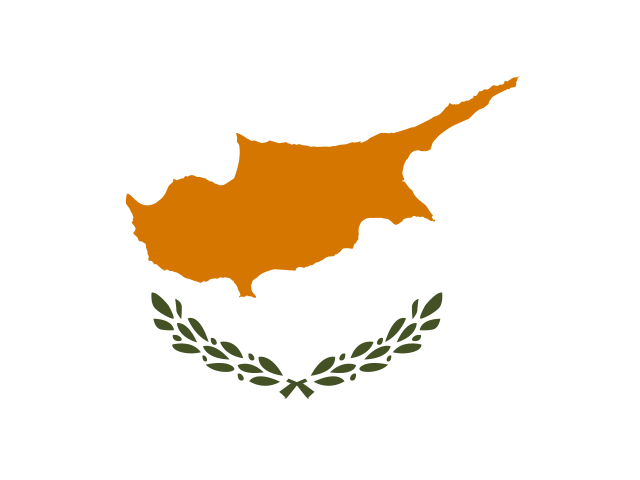
Official name: Republic of Cyprus
Also known as: Κυπριακή Δημοκρατία (Greek), Kıbrıs Cumhuriyeti (Turkish), Kípros
- Capital: Nicosia
- Total Area: 9,251 km² (3,572 sq mi) (Ranked 168th)
- Population: 1,358,282 (Ranked 158th) - (2024 Est.)
- Location: Eastern Mediterranean, south of Turkey and west of Syria
- Languages: Greek (Official), Turkish (Official), English (Widely spoken)
- Religions: Orthodox Christian 89.1%, Islam 1.8%, Others 9.1%
- Ethnic Groups: Primarily Greek Cypriots (77%), Turkish Cypriots (18%), and other minorities.
- Currency: Euro (€) (EUR)
- Time Zone: UTC+2 (EET). Daylight Saving Time is observed (UTC+3).
- Calling Code: (+357)
- Organizations: EU, UN, Commonwealth
- Coastline: 648 km (403 mi)
- Maritime Borders: Mediterranean Sea (surrounded by Egypt, Greece, Turkey, Syria, and Lebanon)
Major Cities and Regions in Cyprus

Nicosia, Limassol, Larnaca, Paphos, Famagusta, and Kyrenia.
Key cities, tourist sites, and historical landmarks:
1. Nicosia
- District: Nicosia District.
- Description: The capital and the country's financial and administrative hub. It is known as the "world's last divided capital." It features 16th-century Venetian walls and rich museums, such as the Cyprus Museum, showcasing the island's history from the Neolithic Age.
2. Limassol
- District: Limassol District.
- Description: Cyprus's second-largest city and its major commercial port. A vibrant tourist and business center, it is famous for the Limassol Castle, a modern marina, long sandy beaches, and the annual Wine Festival.
3. Paphos
- District: Paphos District.
- Description: A city entirely inscribed on the UNESCO World Heritage list. Famous for the "Tombs of the Kings" and stunning Roman mosaics. Mythologically known as the birthplace of Aphrodite, it attracts visitors with its natural beauty and archaeological sites.
4. Larnaca
- District: Larnaca District.
- Description: Home to the island's main international airport. Famous for the Church of Saint Lazarus, the Larnaca Salt Lake (a winter habitat for flamingos), and the Hala Sultan Tekke mosque, an important historical landmark.
5. Ayia Napa
- District: Famagusta District.
- Description: Once a small fishing village, it has transformed into one of Europe's top entertainment destinations. Renowned for Nissi Beach's white sands and crystal-clear waters, it is a hub for nightlife and beach tourism.
6. Troodos Mountains
- Description: The largest mountain range in Cyprus, featuring Mount Olympus, the island's highest peak. The region hosts picturesque mountain villages and UNESCO-listed Byzantine churches with exquisite frescoes; it serves as a ski resort in winter and a hiking haven in summer.
Natural Resources: Copper (from which the island's name is derived), pyrites, asbestos, gypsum, timber, salt, marble, and recent natural gas discoveries.
Note: Cyprus is the third largest island in the Mediterranean and enjoys a strategic location connecting Europe, Asia, and Africa.
Summary: Cyprus - The Island of Love and Ancient History
Cyprus is a unique destination blending Roman and Greek antiquities with breathtaking beaches. The island is administratively divided into 6 districts, with Nicosia as its historic capital, Limassol as an economic hub, and Paphos as an archaeological treasure. The island is renowned for its diverse landscapes, from the green Troodos Mountains to turquoise coastlines.
This page has been viewed
11657
times
Be the first to comment on this topic!
Comments Restricted
Sorry, adding comments is only available for registered users.
Click here to log in or create a new account