
 English
 اللغة العربية
 Spanish

- Countries of the World
- Cities and provinces
- Complete Cooking Recipe Index
- Prophets' Stories
- List of surahs in the Holy Qur'an
- All Countries of the World
- Population of world countries by country
- Traffic signs in Jordan
- Zip code in Jordan
- List of world capitals
- The story of the cow of the Bani Israel
- International Calling Codes
- Al-Quran Recitations mp3
- List of currencies of the world
- Jordanian Cuisine Guide
- Car Brand Logos and Names
- Country codes names
- World time zones by country
- 6 Evergreen Content Topics
- Country flags of the world with images and names
- List of countries and dependencies by area
- List of countries and dependencies by population
News
-
 Driving theory test in Jordan Sat, 09 May 2026
QR Code
Jordan: Hashemite Kingdom History, Petra, Amman & Dead Sea Guide
Official Name: Hashemite Kingdom of Jordan (HKJ) | Al-Urdunn
Total Area of Jordan: 89,342 km² (34,495 mi²) (111th)
Population of Jordan: 11,552,876 (84th) - (2024 est.)
Location: Southwestern Asia, Middle East
Languages of Jordan: ArabicArabic (العَرَبِيَّة) is a group of Semitic dialects spoken by more than 420 million people, mainly in North Africa and the Middle East. Modern Standard Arabic (MSA), known in Arabic as al-Fusha (الْفُصْحَى), is the official form of the language throughout the Arab world, and is very similar to Classical Arabic, the language of the Qur'an and the liturgical language for 1.6 billion Muslims around the world. Arabic has also bly influenced many languages, including unrelated ones, throughout the Islamic world. (official), English
Religions of Jordan: 95% Sunni Islam (official), 3% Christianity, 1% Druze, Baha'i, and others 1%.
The Jordanian dinar is also widely used in the West Bank alongside.
 (JD) (JOD)
Government: Unitary parliamentary constitutional monarchy
Motto: Allāh, al-Waṭan, al-Malik (God, Country, King)
National anthem: Al-Salām al-Malakī al-Urdunī (The Royal Anthem of Jordan)
Postal codes: Jordan uses five-digit postal codes.
Border countries (4): Iraq
 179 km (111 mi), Occupied Palestine
 455 km (282 mi), Saudi Arabia
 731 km (454 mi), Syria
 379 km (235 mi).
 Coastline: Gulf of Aqaba 26 km
Note: Jordan also borders the Dead Sea, for 50 km (31 mi)
Maritime boundaries: Dead Sea, Gulf of Aqaba (Red Sea)
Jordan (Arabic: الأردنّ, al-Urdunn) — is an Arab kingdom situated in a strategic location in the Middle East, at the crossroads of Asia, Africa, and Europe. Jordan has repeatedly been called an "oasis of stability" in the region, given its pivotal role and stable political history.
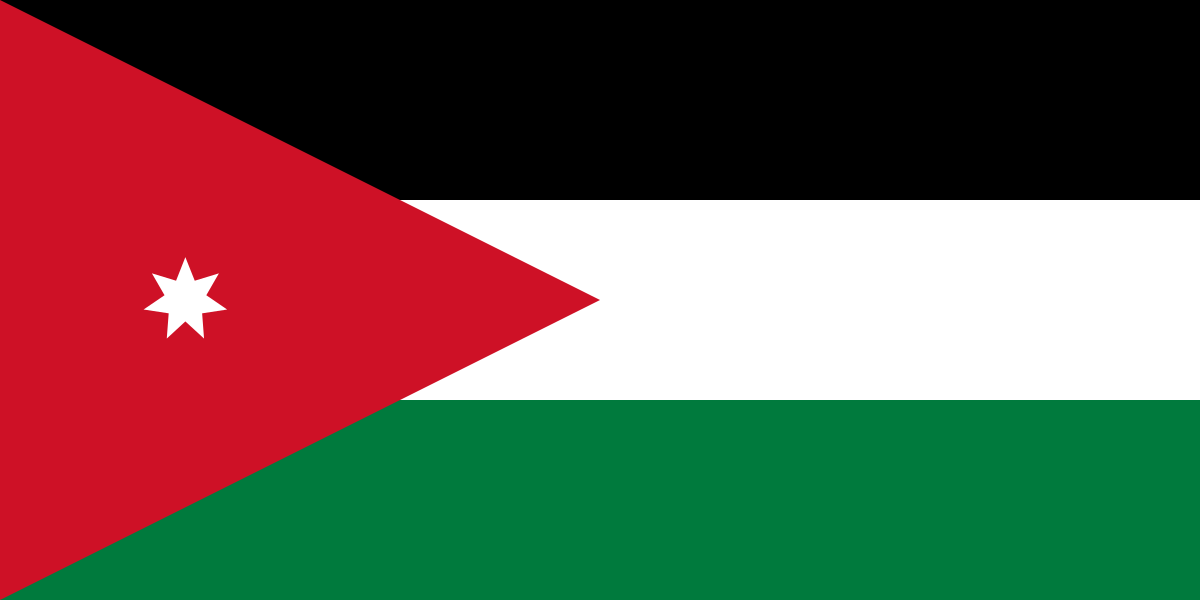
The Emirate of Transjordan was a formally autonomous political entity from April 11, 1921, until the declaration of independence of the Hashemite Kingdom of Jordan in 1946. It encompassed most of the lands east of the Jordan River, from which it takes its name. However, there are other theories regarding the origin of the kingdom's name. One theory is that the word "Jordan," composed of "Jor" and "Dan," refers to the northern tributaries of the Jordan River. Over time, the word evolved into "Ordan" and then "Urdun." The word "Jordan" also means strength and dominance. Some say that "Urdun" is the name of one of Noah's descendants. The Greek name for Jordan is "Jordanem" and "Jordan," meaning "slope" or "deep." When King Abdullah II established the Emirate of Transjordan, he called it the "Emirate of the Arab East." was established on April 11, 1921, and became independent

Jordan's Independence On May 25, 1946, after the end of the British Mandate, the United Nations agreed to recognize Jordan as an independent, sovereign kingdom. The Jordanian parliament declared King Abdullah I as its king, who continued to rule until his assassination in 1951 while leaving Al-Aqsa Mosque in Jerusalem. on May 25, 1946, changed its name to the Hashemite Kingdom of Jordan.
Historical Depth and Civilizational Legacy
The land of Jordan is an open museum, bearing the traces of ancient civilizations dating back thousands of years. Various kingdoms and peoples have succeeded each other on this land: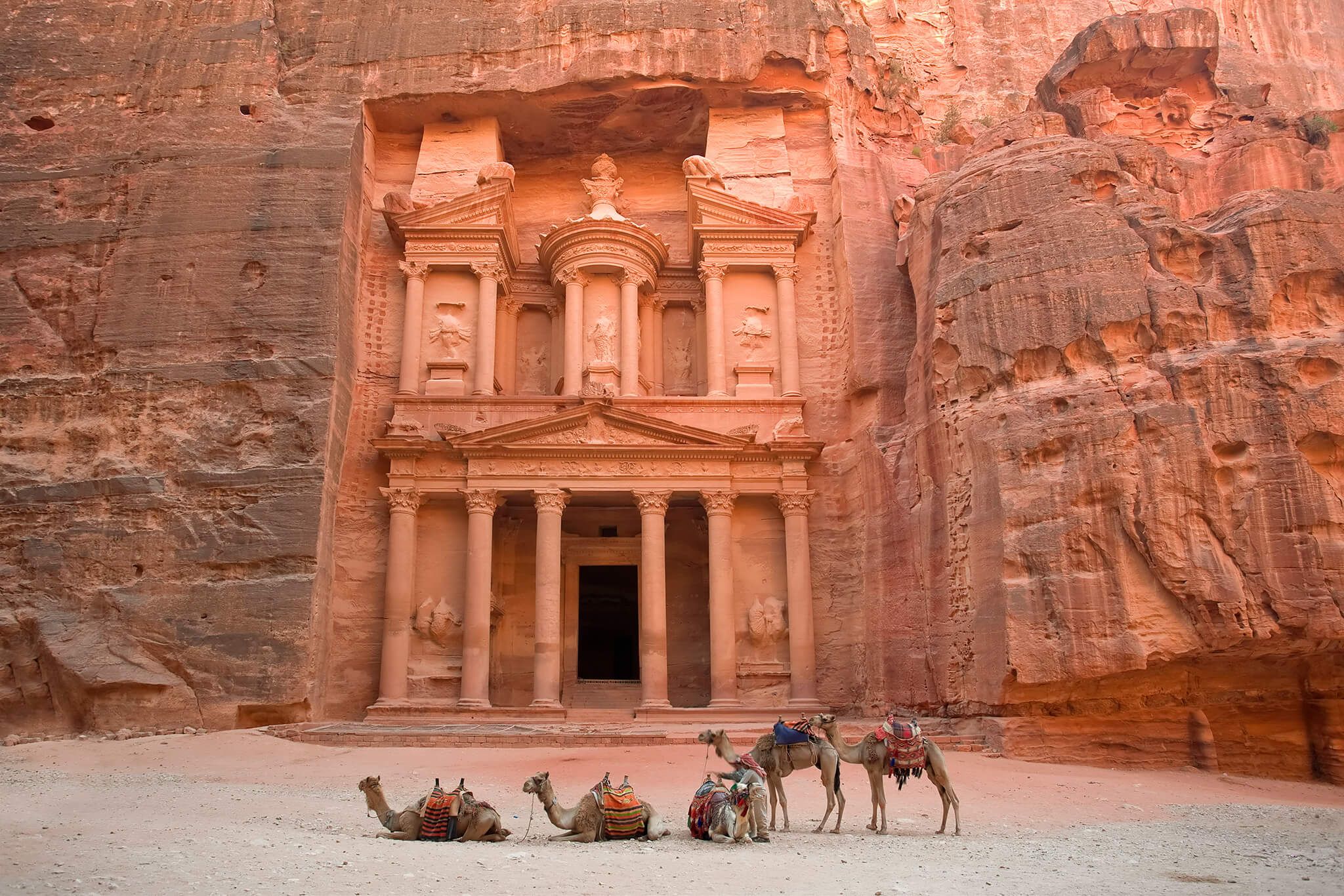
- Ancient Kingdoms: Ancient kingdoms such as Moab, Gilead, and Edom were located within the borders of modern Jordan.
- Nabataean and Roman Heritage: The famous red-stone city of Petra is the most prominent witness to the grandeur of the Nabataean Kingdom, which made it its capital. Later, Petra became part of the Roman Province of Arabia Petraea, and Northern Jordan flourished within the alliance of the ten Roman cities known as the "Decapolis".
- Modern Era: Jordan remained part of the Ottoman Empire until 1918, then fell under the British Mandate. The Kingdom gained its independence to become an independent sovereign monarchy in 1946.
The Capital: Amman (City of History and Life)
Amman is the country's capital and largest city, representing the commercial and cultural heart of Jordan. Historically, Amman was built on the ruins of an ancient city:- Rabbath-Ammon: It was originally named after the Ammonites, who made it their capital in the 13th century BC, and it was a major city in the ancient Near Eastern civilization.
- Philadelphia: It was later named this when it joined the alliance of the ten Roman cities, the "Decapolis".
- Modern Amman: Its current name is derived from "Rabbath-Ammon." It currently serves as one of the region's major commercial and transportation hubs, as well as a key cultural capital of the Arab world.

Northern Governorates
- Irbid — Known as the "Bride of the North." It is the second-largest city in terms of population and is famous as a major agricultural center (for olives and wheat) and an educational hub due to its large universities.
- Jerash — Famous for its exceptionally well-preserved Roman ruins, earning it the nickname "Pompeii of the East." It is characterized by its green nature and moderate climate.
- Ajloun — Characterized by lush, rolling green hills and a castle built by Saladin during the Crusades called "Qal'at al-Rabadh" which is surrounded by a moat carved from solid rock.
- Mafraq — The desert has transformed into green fields due to the spread of artesian wells in the area, and it is considered the second source of agricultural production. It was named Al-Mafraq (meaning 'crossroads') because of its location at the junction of international roads.
- Al ‘AsimahAmman is the capital and the largest city of Jordan, and the country's economic, political, and cultural center. With a population of four million as of 2021, Amman is Jordan's primate city and is the largest city in the Levant region, the fifth-largest city in the Arab world, and the tenth-largest metropolitan area in the Middle East.
 (Amman): The beating heart of Jordan, its political and economic center. It features a unique blend of authenticity and modernity, including historical landmarks like the Roman Amphitheater and the Citadel Hill.
 - Zarqa — Considered the most important industrial center in Jordan, and the third-largest governorate by population.
- Balqa — Its capital is the city of As-Salt, a deeply historical city listed as a UNESCO World Heritage site. It is characterized by its unique Ottoman architecture.
- Madaba — Known as the "City of Mosaics" for its rare mosaic panels, the most important of which is the Map of the Holy Land. It also includes the sacred Mount Nebo.
- Karak — This ancient city is famous for its renowned Karak Castle, and the picturesque Wadi Mujib Nature Reserve, which offers adventures and natural creations carved by water into the rocks.
- Tafila — Characterized by its geographical and climatic diversity, economic activity, and the presence of natural resources such as arable land, and mineral resources like phosphate, cement, and copper.
- Ma'an — The largest governorate in Jordan by area, and considered the desert gateway to the south. It encompasses Jordan's most important tourist site, the city of Petra, in addition to Wadi Rum.
- Aqaba — A beach resort located on the Gulf of Aqaba. It is Jordan's only seaport and represents a vital nerve of the Jordanian economy as it is a special economic zone exempt from customs duties.
Natural resources: phosphates, potash, oil shale.
Jordan is a country rich in history and culture, featuring many facts that make it unique and distinctive:
-
The Dead Sea, the Lowest Point on Earth: The Dead Sea is the lowest point on Earth, situated at 1,378 feet (420 meters) below sea level. Its water is highly saline, making swimming a unique experience where the body effortlessly floats on the surface.
-
Petra, the Rose City: Petra is one of the New Seven Wonders of the World, an archaeological city carved into rock, and Jordan's most prominent tourist attraction. Dating back over 2,000 years, it was the capital of the Nabataeans.
-
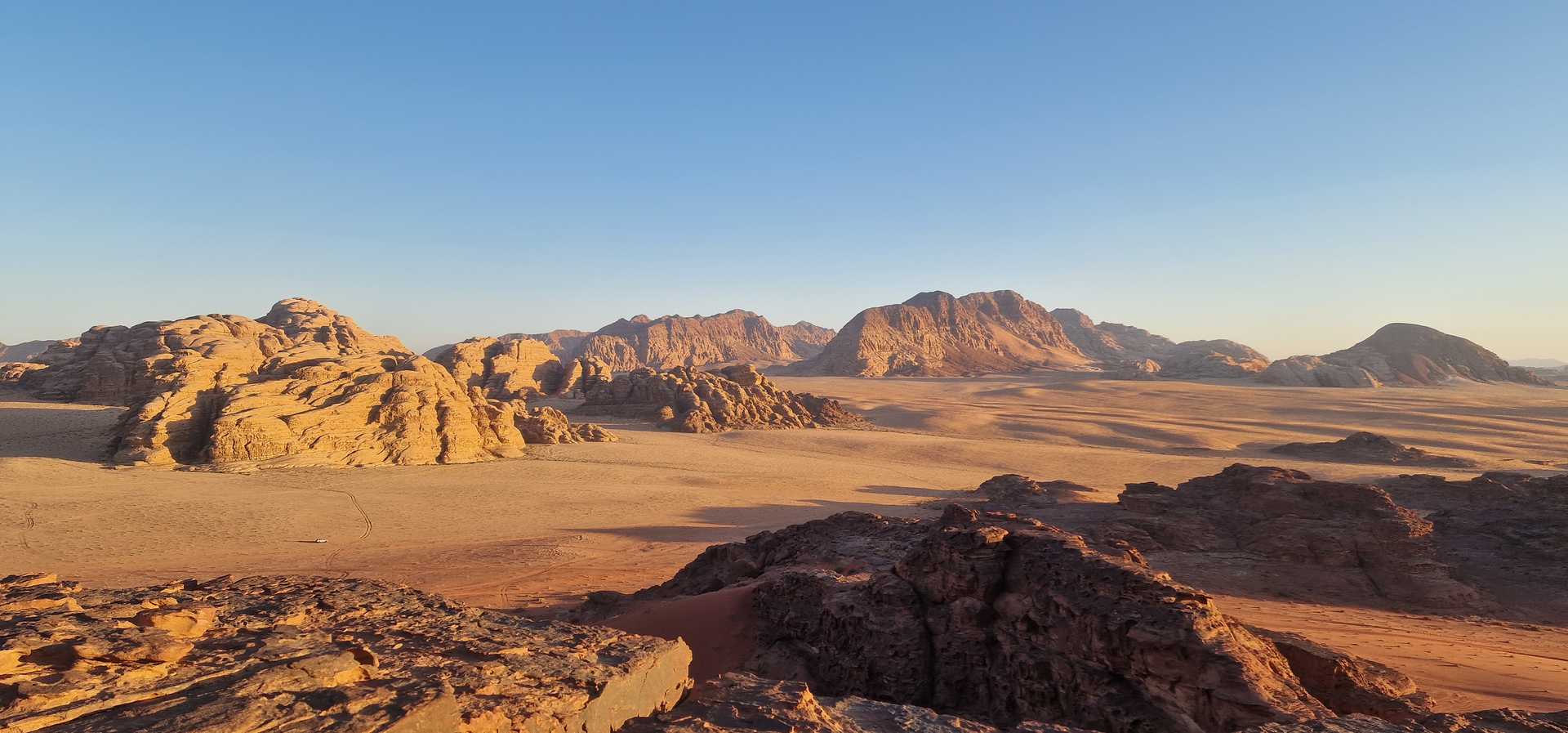
Wadi Rum, Valley of the Moon: Wadi Rum is known for its unique natural beauty, magnificent rock formations, and red sand dunes. This valley has been used to film many science fiction movies set on the planet Mars, such as "The Martian."
-
The World's Oldest Human Statue: The oldest known human statue was found in the village of 'Ain Ghazal in Jordan, dating back approximately 9,500 years.
-
The World's Oldest Dam: Jordan hosts the Jawa Dam
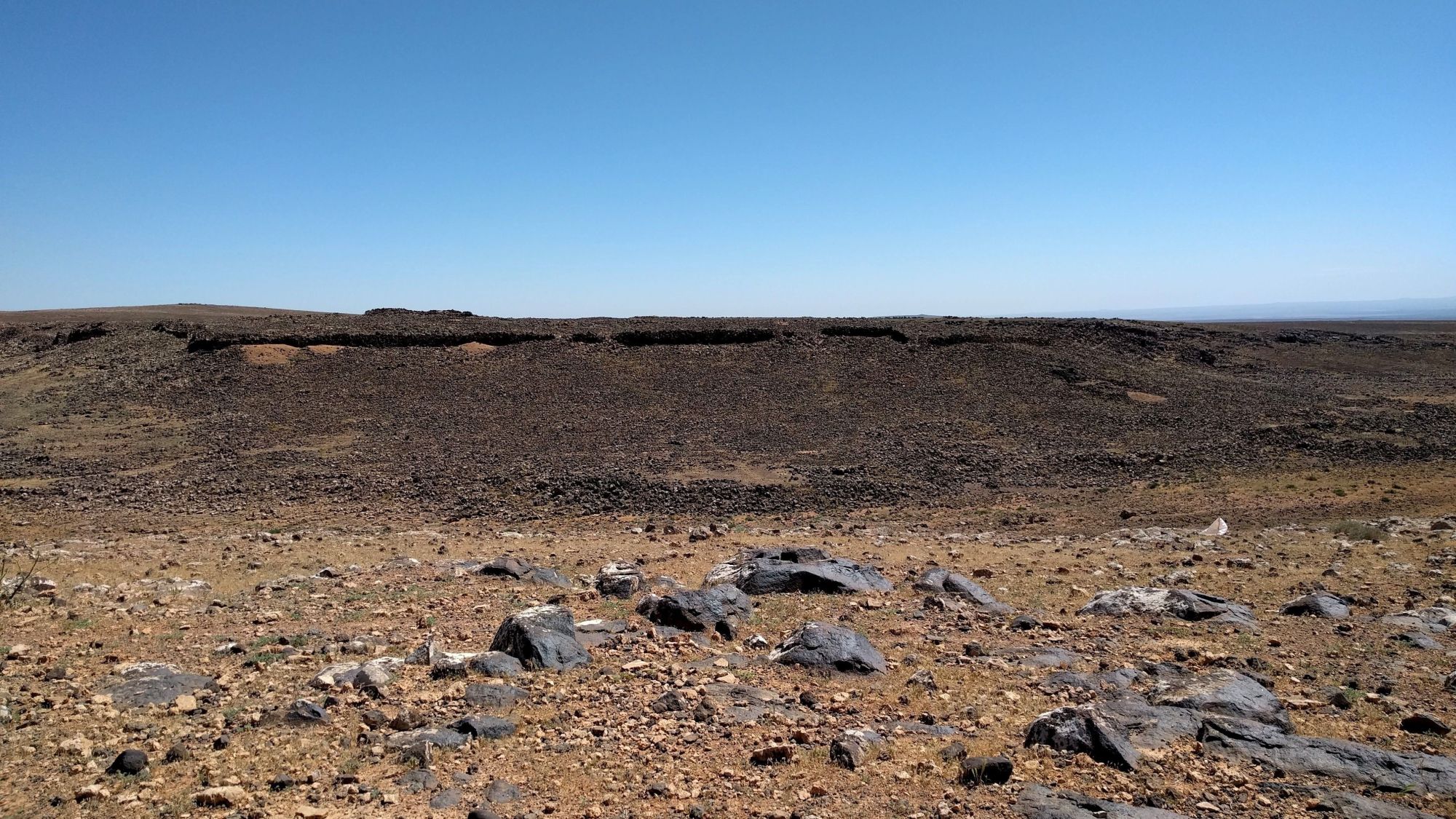
Jawa Dam (سد جاوا), located in the Mafraq Governorate of eastern Jordan, is the oldest known dam in the world, dating back to the late 4th millennium BC. It is part of a sophisticated water system at the Jawa archaeological site, a proto-urban settlement that engineered dams, canals, and reservoirs to manage scarce seasonal water and support agriculture in its arid environment., considered the oldest dam ever built in the world, dating back to around 3000 BC. -
Underwater Military Museum: Aqaba in Jordan is home to a unique underwater museum, where a collection of military vehicles like tanks and armored personnel carriers were intentionally sunk to form artificial coral reefs, attracting divers.
Neighboring countries: Saudi Arabia | Iraq | Syria | Occupied Palestine
All rights reserved | gpsarab.com - © 2012-2026
Be the first to comment on this topic!
Comments Restricted
Sorry, adding comments is only available for registered users.
Click here to log in or create a new account