
 English
 اللغة العربية
 Spanish


- Countries of the World
- Cities and provinces
- Complete Cooking Recipe Index
- Prophets' Stories
- List of surahs in the Holy Qur'an
- All Countries of the World
- Population of world countries by country
- Traffic signs in Jordan
- Zip code in Jordan
- List of world capitals
- The story of the cow of the Bani Israel
- International Calling Codes
- Al-Quran Recitations mp3
- List of currencies of the world
- Jordanian Cuisine Guide
- Car Brand Logos and Names
- Country codes names
- World time zones by country
- 6 Evergreen Content Topics
- Country flags of the world with images and names
- List of countries and dependencies by area
- List of countries and dependencies by population
QR Code
Scan the code to visit the page
News
-
 Driving theory test in Jordan Sat, 09 May 2026
Guinea-Bissau
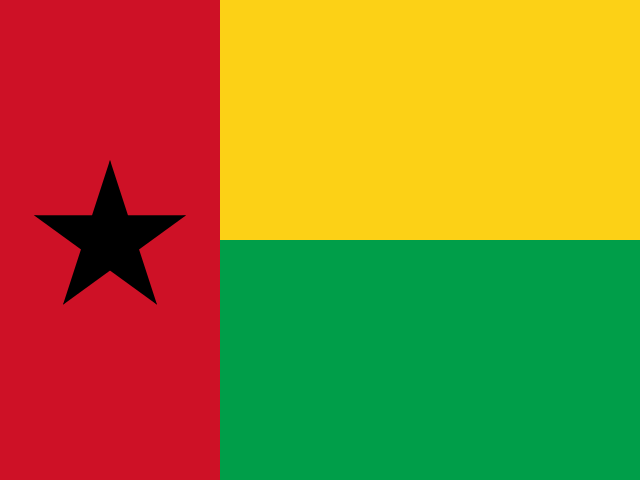
Official name: Republic of Guinea-Bissau
- Capital of Guinea-Bissau: Bissau
- Total Area: 36,125 km² (13,948 mi²) (Rank 137)
- Population: 1,995,688 (Rank 148) - (2024 estimate)
- Location: Western Africa
- Languages of Guinea-Bissau: Portuguese (official), Crioulo, other local languages
- Religions in Guinea-Bissau: Sunni Muslim 45.1%, Christian 22.1%, other traditional beliefs 14.9%, unaffiliated 2%, other religions 0.3% (2020 estimate)
- Ethnic groups in Guinea-Bissau: Balanta 30%, Fula 20%, Mandinka 14%, Mandyako 13%, Papel 7%, Europeans and mixed less than 1%
- Currency: West African CFA franc (XOF)
- Time zone: UTC (Greenwich Mean Time)
- Calling code: (+245)
- Organizations: United Nations, African Union, Organisation internationale de la Francophonie
- Border countries (2): Guinea 421 km (262 mi), Senegal 341 km (212 mi)
- Coastline: 350 km (217 mi)
- Maritime boundaries: Atlantic Ocean
Major Cities and Regions of Guinea-Bissau

Bafatá, Biombo, Bissau (autonomous sector), Bolama, Cacheu, Gabú, Oio, Quinara, Tombali.
These regions include major cities and towns of historical or economic importance:
1. Bissau
- Region: Bissau Autonomous Sector.
- Description: The capital and largest city of Guinea-Bissau and its main port. Located at the mouth of the Geba River on the Atlantic Ocean. Founded in 1687 as a fortified Portuguese trading settlement. Houses the Presidential Palace, Bissau Cathedral, and the National Museum.
2. Bafatá
- Region: Bafatá region.
- Description: The second largest city in Guinea-Bissau, located in the center of the country. Famous for being the birthplace of Amílcar Cabral, the revolutionary leader who led the independence movement. Serves as an important commercial and administrative center in the central region.
3. Gabú
- Region: Gabú region.
- Description: A city in eastern Guinea-Bissau near the border with Guinea. It was the capital of the historical Kabu region and is known for its rich cultural heritage. Serves as an important center for agriculture and livestock in the eastern region.
4. Cacheu
- Region: Cacheu region.
- Description: A historic city located on the Cacheu River in the northwest of the country. It was an important center for the slave trade during the colonial era and features the historic Cacheu Fortress dating back to the 16th century.
5. Mansôa
- Region: Oio region.
- Description: A town in central Guinea-Bissau, an important administrative and commercial center. Known for its vibrant local markets and proximity to fertile agricultural areas and the Cagó Natural Reserve.
6. Catió
- Region: Tombali region.
- Description: A town in southern Guinea-Bissau, capital of the Tombali region. Located near the border with Guinea and known for being a center for fishing and agriculture. Serves as a gateway to the natural areas in the south of the country.
7. Bolama
- Region: Bolama region.
- Description: An island and historical settlement in the Bissagos Archipelago. It was the first capital of Portuguese Guinea (Guinea-Bissau) from 1879 to 1941. Known for its abandoned colonial buildings and pristine nature.
8. Bubaque
- Region: Bolama region.
- Description: A town in the Bissagos Archipelago, the largest settlement on the islands. Known for its beautiful beaches and pristine nature, serving as an ecotourism center. Considered the gateway to the Bissagos Archipelago, a UNESCO World Heritage Site.
Natural resources: Fish, timber, phosphates, bauxite, clay, granite, limestone, petroleum (untapped), arable land.
Note: Guinea-Bissau is one of the poorest and smallest countries in West Africa. It is famous for the Bissagos Archipelago consisting of 88 islands, a UNESCO World Heritage Site with rich biodiversity and breathtaking natural beauty.
Summary: Guinea-Bissau - Land of Islands and Revolutionary History
Guinea-Bissau is distinguished by its rich revolutionary history as the first Portuguese colony in Africa to gain independence, and its stunning natural beauty in the Bissagos Archipelago. The country is divided into 8 regions and 1 autonomous sector, with its most important cities being Bissau (the capital), Bafatá (birthplace of Amílcar Cabral), and Bolama (historical capital). Guinea-Bissau is famous for its picturesque islands and cultural and natural diversity.
This page has been viewed
11575
times
Be the first to comment on this topic!
Comments Restricted
Sorry, adding comments is only available for registered users.
Click here to log in or create a new account