
 English
 اللغة العربية
 Spanish
- Countries of the World
- Cities and provinces
- Complete Cooking Recipe Index
- Prophets' Stories
- List of surahs in the Holy Qur'an
- All Countries of the World
- Population of world countries by country
- Traffic signs in Jordan
- Zip code in Jordan
- List of world capitals
- International Calling Codes
- Al-Quran Recitations mp3
- List of currencies of the world
- Jordanian Cuisine Guide
- Car Brand Logos and Names
- Country codes names
- 6 Evergreen Content Topics
- World time zones by country
- Country flags of the world with images and names
- List of countries and dependencies by area
- List of countries and dependencies by population
Amman: The Capital of Jordan and the Beating Heart of the Middle East
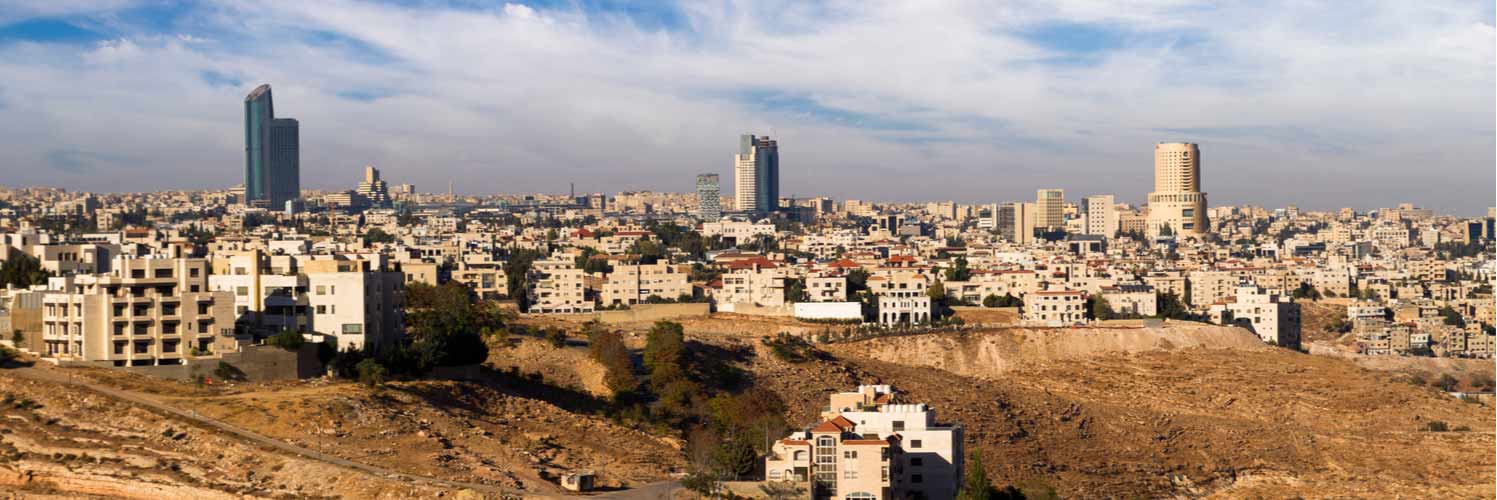
Amman: A Historical and Civilizational Overview
The Capital Governorate is one of the twelve governorates of Jordan. It contains the capital of Jordan (Amman), which houses the most important state institutions, in addition to all government departments, including the House of Representatives located in the Al-Abdali area.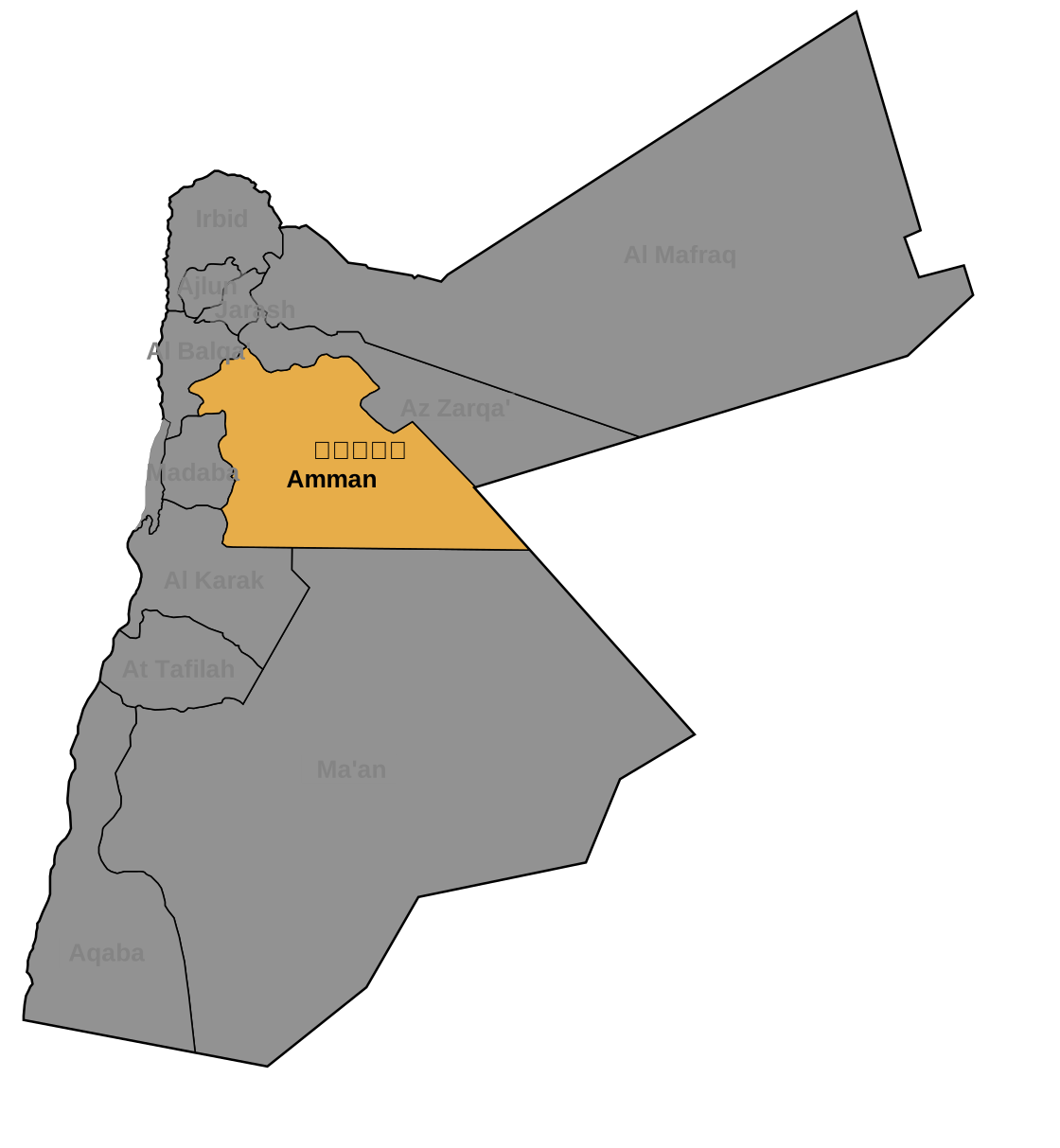
- It is the largest governorate in terms of population and the third largest in terms of area after Ma'an and Mafraq governorates, and the most important one, representing the core of the Jordanian state.
- The history of Amman dates back to the seventh millennium BC, making it one of the oldest continuously inhabited cities in the world to this day.
- Amman is an ancient city built on the ruins of a city historically known as "Rabbath Ammon", then "Philadelphia", before its current name "Amman", derived from "Rabbath Ammon". The Ammonites made it their capital.
- The city was built on seven hills and was apparently the center of the region at that time. It is one of the four capitals of the Levant and also one of the ancient Levantine cities that became the capital of the Emirate of Transjordan and then the Hashemite Kingdom of Jordan after its independence in 1946.
- Amman is considered the commercial and administrative center of the Kingdom and its economic and educational heart. It has become an attraction for many Arab communities due to its privileged location and contemporary architecture.
Geographical Location and Climate
- Location: The Capital Governorate is centrally located among the governorates of Zarqa, Balqa, Madaba, Karak, and Ma'an. Its borders extend to reach the Jordanian-Saudi border.
- Climate: A moderate Mediterranean climate prevails in most areas of the capital, especially in the highlands, while a semi-arid climate prevails in the eastern regions.
- Temperatures: Rise in summer to the mid-30s Celsius, and drop in winter to sometimes reach zero or below, causing snowfall on the highlands.
Area and Population of the Capital Governorate
- Population of the Capital Governorate: (4,744,700) people
- Governorate Area: 7,579 km²
The capital is the most populous and the third largest in area among the Kingdom's governorates.
Cities, Towns, and Villages in the Capital Governorate
Archaeological and Historical Sites
Amman – A Unique Blend of Old and NewAmman boasts a wealth of famous archaeological landmarks that still bear witness to the ancient civilizations that inhabited the city. On the Citadel Hill, which rises above the old city, stands the "Temple of Hercules" built by the Romans in the 2nd century AD on the remains of an ancient Ammonite temple, in addition to the Archaeological Museum which contains many exhibits from various civilizations and tools representing human life in those ancient times. In the city center lies the Street of the Nymphs, and nearby stands the large Roman Theater that seats five thousand spectators, and other landmarks still used today for many cultural and artistic events. It is one of the centers utilized by the Jordan Festival to organize its events.
-
The Roman TheaterThe Roman Theater (Amman)
The Roman Theater in Amman is a massive amphitheater seating six thousand, testifying to the architectural prowess of the Roman Empire. Built in the 2nd century AD, it is carved into the north side of a hill and oriented to shield spectators from the sun. The theater is still used today for cultural events and performances, showcasing its enduring legacy. It is part of a larger complex that includes a smaller Odeon theater and a museum, giving visitors a glimpse into the area's rich history. The theater is complemented by two small on-site museums, the Folklore Museum and the Jordanian Museum of Popular Traditions, which offer insight into Jordan's cultural heritage. The museums display artifacts, costumes, and elements of daily life, providing a deeper understanding of the region's history. Coordinates: 31°57′06.09″N 35°56′21.50″E
-
Citadel Hill (Jabal al-Qal'a)
Includes the Roman Temple of Hercules, the Umayyad Palace (an example of early Islamic architecture), and the Jordan Archaeological Museum. Offers stunning panoramic views of the city.- Citadel HillCitadel Hill (Amman)
 is an ancient historical site located in the heart of Amman. It is one of the oldest continuously inhabited places in the world, with evidence of settlement dating back to the Bronze Age. The Citadel is home to many important archaeological structures, including the Roman Temple of Hercules, the Byzantine Church, and the Umayyad Palace. Visitors can explore the ruins and enjoy panoramic views of the city from its elevated position. The site also houses the Jordan Archaeological Museum, which displays artifacts from different periods of Jordan's history.
Watch the sunset from the viewpoint near the Citadel. But also pay attention to the time of the call to prayer. If you listen to it from the viewpoint, with the entire city laid out before you, you'll get an unforgettable auditory impression. Coordinates: 31.9547°N 35.9343°E - Umayyad Palace (In the Citadel) is considered a splendid example of early Islamic architecture, dating back to the 8th century. This historical site is located within the Amman Citadel and provides a glimpse into the grandeur of the Umayyad dynasty. The palace complex includes a large audience hall, a colonnaded street, and a vaulted entrance chamber, showcasing the architectural mastery of that period. Coordinates: 31.9555°N 35.9342°E
- Jordan Archaeological Museum (In the Citadel) Established in 1952 to tell the story of Jordanian civilization by displaying archaeological and historical collections. The museum contains collections of artifacts gathered from various sites across Jordan. The artifacts are dated from the Paleolithic to the Islamic era, including pottery, metals, and glass, in addition to inscriptions, coins, and statues. Among the museum's prominent exhibits are the plaster statues of 'Ain Ghazal.
- Citadel HillCitadel Hill (Amman)
-
Qasr al-Abd or Iraq al-Amir PalaceQasr al-Abd or Iraq al-Amir Palace (Amman)
Qasr al-Abd is located in Jordan in Wadi al-Seer, near the village of Iraq al-Amir, about 17 kilometers west of Amman, Jordan. This Hellenistic palace is believed to have been built by the Tobiad family and offers a unique glimpse into ancient architecture and history, differing from the more common Roman and Umayyad structures in the region. The site is renowned for its well-preserved ruins, intricate carvings, and the surrounding natural beauty, making it a destination worth visiting for both history buffs and nature lovers alike.
In addition to the palace itself, the area offers several other attractions. The nearby caves, accessible by a short climb, provide further historical intrigue with their ancient inscriptions and evidence of past human habitation. The Iraq al-Amir Women's Cooperative Society, located nearby, offers an opportunity to buy local ceramics and paper products, adding a cultural dimension to the visit. Coordinates: 31.9128°N 35.7518°E
-
Cave of the Seven Sleepers (Ahl al-Kahf)
The Cave of the Seven Sleepers in Amman, Jordan, is a religious and historical site worth visiting for those interested in the story mentioned in the Quran and the Bible. The site is well-preserved and easily accessible, with a mosque nearby for prayer. The cave itself is small but contains the tombs of the seven sleepers, with one tomb displaying bones that can be seen using a flashlight. The site is not overly touristy, providing a quiet and serene atmosphere for contemplation.
This cave was identified with the Quranic account due to the name of the nearby village, Al-Rajib, which linguistically resembles the word Al-Raqeem mentioned in Surah Al-Kahf.
The Quran also refers to them as the "Companions of the Cave" - a group of youths who fled, according to Islamic and Christian sources, from the religious persecution of the Roman Emperor Decius. Legend says these men hid in a cave around 250 AD, miraculously emerging centuries later - according to the Holy Quran, after 309 lunar years. It was rediscovered in 1951.
The guide present at the site, usually an Imam, offers informative tours in Arabic and English, providing insights into the history and significance of the cave. Entrance to the site is free, making it accessible to all visitors.
Overall, visitors describe the Cave of the Seven Sleepers as a must-visit destination for those interested in religious history and seeking a unique and meaningful experience. The site's connection to the Quran and the story of the Seven Sleepers adds a layer of depth and significance to the visit. The well-preserved tombs, informative guide, and tranquil atmosphere contribute to a memorable and enlightening experience for visitors. Whether you are a Muslim looking to connect with your faith or a history enthusiast seeking to explore ancient tales, the Cave of the Seven Sleepers offers a compelling and enriching experience worth visiting. Coordinates: 31°53'55.0"N 35°58'24.0"E
-
Roman Nymphaeum
The Nymphaeum was built in the 2nd century AD, during the same period as the nearby Theater and Odeon.
It was located along the Amman Stream, a watercourse that dried up in the 20th century. The Nymphaeum is a short distance from other Roman remains, including the Forum (at the site of Hashemite Square today), and the Roman Theater and Odeon.
Roman cities always contained decorative fountains, as water always played an important role, and Philadelphia, as Amman was known to the ancient Greeks and Romans, was no exception. The main fountain or Nymphaeum, dedicated to the water nymphs, is located near the theater complex and dates back to 191 AD.
It is located at the intersection of Ibn al-Atheer and Quraish streets in the downtown area. Coordinates: 31°57'01.2"N 35°56'10.2"E
-
Ammonite Watchtower (Rujm al-Malfouf in Wadi Saqra)
A circular watchtower built by the Ammonite Kingdom between 500-1000 BC.
-
The Ten Arches Bridge
It is a viaduct in Amman, Jordan, built as part of the Hejaz Railway during the Ottoman era. It is considered one of the old landmarks of Amman.
The bridge consists of two-story arches made of limestone blocks, with the upper floor comprising ten arches containing the railway track, and the lower floor consisting of eight arches forming a pedestrian path and water drainage channels.
The bridge is considered one of the old landmarks of Amman and is still used by trains operating on the Hejaz Railway.
Its construction was completed in 1908 when Amman Station was opened, and it became a primary target for destruction by Allied forces during the World War I offensive, which was unsuccessful. A structural analysis in 2022 showed that the bridge is still capable of bearing loads but may be damaged by a strong earthquake. Coordinates: 31°56′21″N 35°57′22″E
Modern Mosques and Museums
-
Al-Husseini Grand MosqueAl-Husseini Grand Mosque (Amman)
Al-Husseini Grand Mosque, built in 1924, is a prominent religious and historical landmark in Amman, Jordan. The mosque was built on the site of an old Umayyad-era mosque, commissioned by King Abdullah I. The mosque is renowned for its stunning Ottoman-style architecture, featuring a large prayer hall, elegant minarets, and a spacious courtyard. It serves as a central place of worship for the local Muslim community and an important cultural and historical site for visitors. The mosque's location in Amman's bustling downtown area makes it easily accessible for those exploring the city's rich history and vibrant culture.
Documents show that the mosque is located in the heart of downtown Amman, situated on the site of a previous mosque built during the caliphate of Omar ibn al-Khattab (634-644 AD) and renovated in the Umayyad era (661-750 AD). Coordinates: 31.9496326°N 35.932045°E
-
King Abdullah I MosqueKing Abdullah I Mosque (Amman)
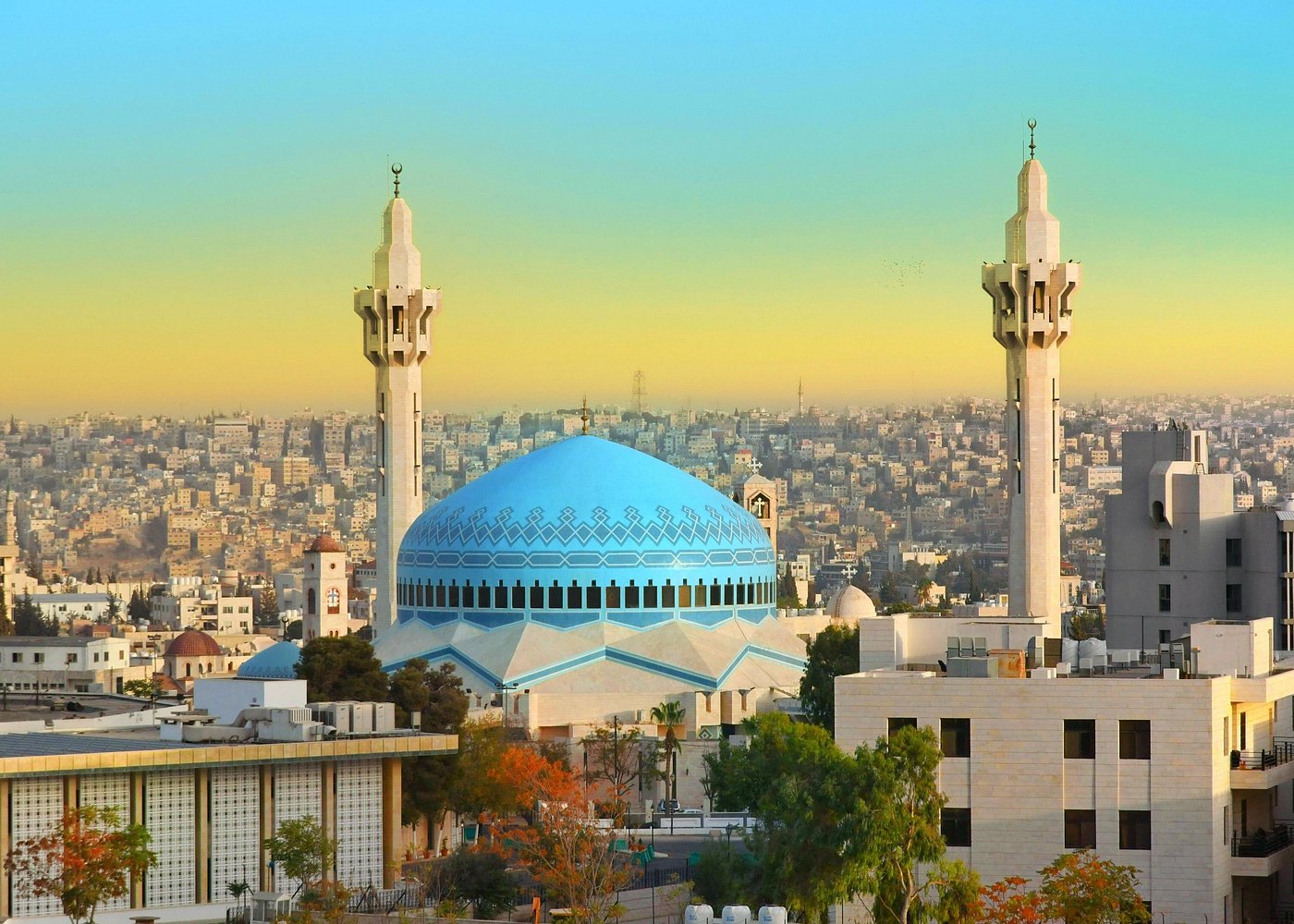
 It is a mosque located in Amman, Jordan. Named in honor of Abdullah I, the mosque was built between 1982 and 1989 and is crowned with a blue mosaic dome, under which 3000 Muslims can pray. The mosque is located in the Al-Abdali area of the city.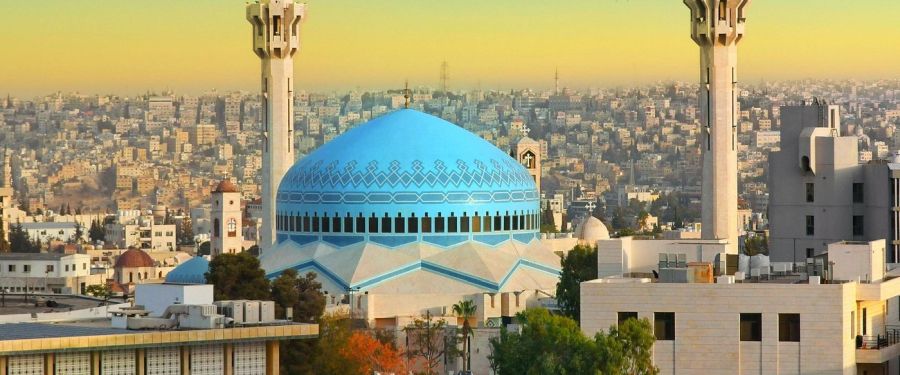
Tourists are allowed to visit. Men must wear long trousers and women must cover their heads, arms, and legs. A robe with a head cover is provided free of charge for this purpose. Coordinates: 31°57′42″N 35°54′47″E
-
Abu Darwish Mosque
Located on Jabal al-Ashrafiyya, one of the seven hills of Amman, Abu Darwish Mosque is an architectural landmark known for its unique black and white stone facade. Built in 1961, the mosque features an Ottoman style with Syrian influence, making it a visually charming site. The mosque's design, characterized by alternating rows of black and white stones, is reminiscent of traditional Syrian architecture and is a testament to the cultural and historical influences in the region. The mosque was funded by Abu Darwish (Mustafa Hassan), who was born in the Caucasus and adopted Syrian architectural styles.
While the mosque is a place of worship and not primarily a tourist destination, its exterior is a major attraction for visitors.
Abu Darwish Mosque is not only an architectural marvel but also a place of peace and contemplation. The mosque accommodates more than 7000 worshippers and houses a small Islamic museum, a library containing over 3000 books, and a school for teaching the Holy Quran. The mosque also played a role in unifying the call to prayer (Adhan) in Amman, as the first unified Adhan was broadcast from this site. Coordinates: 31°56′29″N,35°56′15″E
-
The Jordan Museum
The Jordan Museum is located in the Ras al-Ain area, in the heart of Amman, where the main buildings of the Greater Amman Municipality and the capital's cultural facilities are located. It is one of the best museums in the Middle East. Housed in a large modern building, the museum displays a series of beautiful and informative exhibits that tell the epic historical story of Jordan from the earliest peoples through the Nabataean civilization to the beginning of the modern era. Visitors can tour the exhibits and follow the story in chronological order for a deeper understanding. Furthermore, the exhibits are well-organized by type, such as architecture, food, art, or lifestyles and culture. The many highlighted historical artifacts in the museum include the oldest human statues in human civilization, dating back to 7500 BC. The Ain Ghazal statues are wonders of the world. Additionally, the Dead Sea Scrolls are in the museum, including the only Copper Scroll. All exhibits are well-designed, detailed, and thoughtful, with descriptions in both English and Arabic for each item. Coordinates: 31°56'43.3"N 35°55'33.3"E
-
The Royal Automobile Museum
The museum is located next to Al-Hussein Public Gardens and was established in 2003 at the behest of King Abdullah. The museum displays a rare collection of Jordanian vehicles ranging from the cars of Al-Hussein bin Ali that came to Amman in 1916 to modern sports cars.
The museum contains the vehicle used in the filming of the Hollywood movie "The Martian," which used the Wadi Rum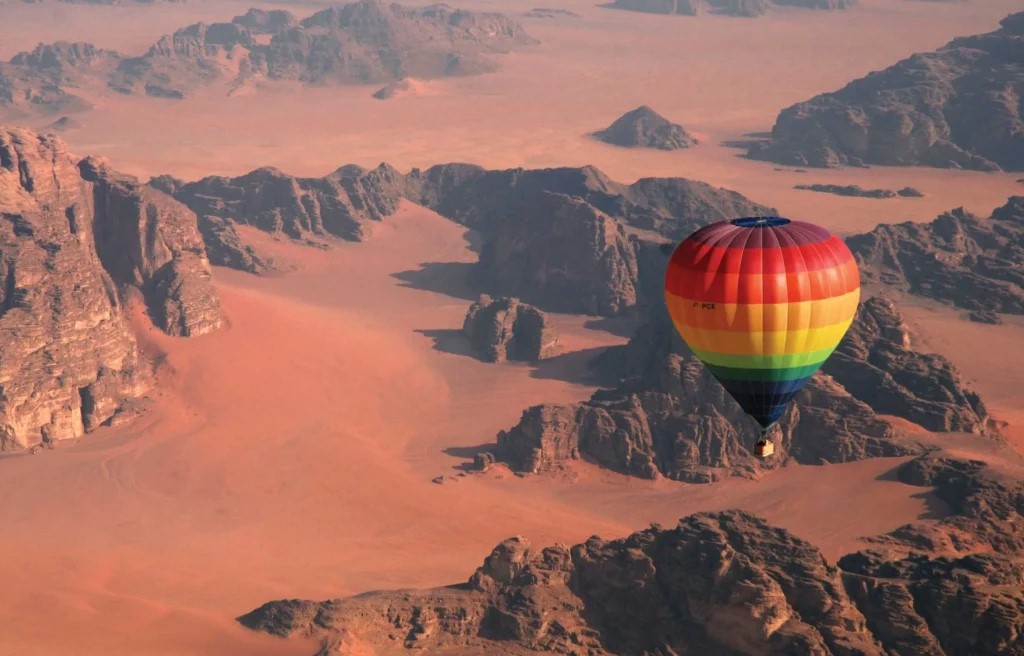
Wadi Rum, also known as The Valley of the Moon, is a valley cut into the sandstone and granite rock in southern Jordan, near the border with Saudi Arabia, about 60 kilometers (37 miles) east of the city of Aqaba. With an area of 720 square kilometers (280 square miles), it is the largest wadi in Jordan.
Many prehistoric civilizations have left rock inscriptions and monuments in Wadi Rum. Today, Wadi Rum is a popular tourist destination, offering guided tours, hiking, and rock climbing. The Wadi Rum Protected Area has been inscribed on the UNESCO World Heritage List since 2011. site listed on the UNESCO World Heritage List in Jordan as the backdrop for the Mars scenes. The vehicle was donated to Jordan in return for the hospitality Jordan provided to the film crew. Coordinates: 31.9842°N 35.8257°E
Entertainment Areas and Markets
-
Rainbow Street (Jabal Amman)
This street is located near the First Circle in Jabal Amman and is an interesting area to stroll and explore. It was named after the old Rainbow Cinema, which is now out of service, but the area has witnessed a revival with the restoration and repurposing of many old houses. In the area, there are some cafes, a Caribbean restaurant, an Indian restaurant, a sushi restaurant, and an ice cream shop. There is also the Royal Film Commission, which sometimes holds outdoor film screenings on its balcony, and some interesting small shops. Coordinates: 31.950618°N 35.923107°E
Jordanian Cuisine (including Amman)
National and Main Dishes
-
MansafMansaf
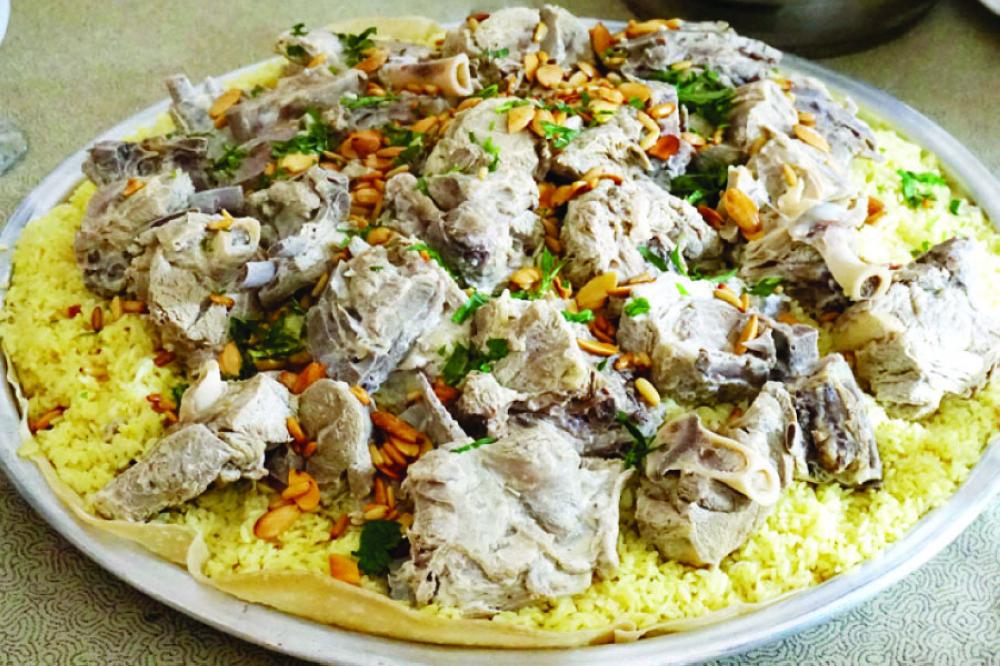 (المنسف): It is the national dish of Jordan, known in all regions. It consists of lamb cooked in dried yogurt (Jameed) and served on a layer of rice and Shrak bread. It is served on occasions such as wedding feasts, holidays, and also at condolence gatherings.
 -
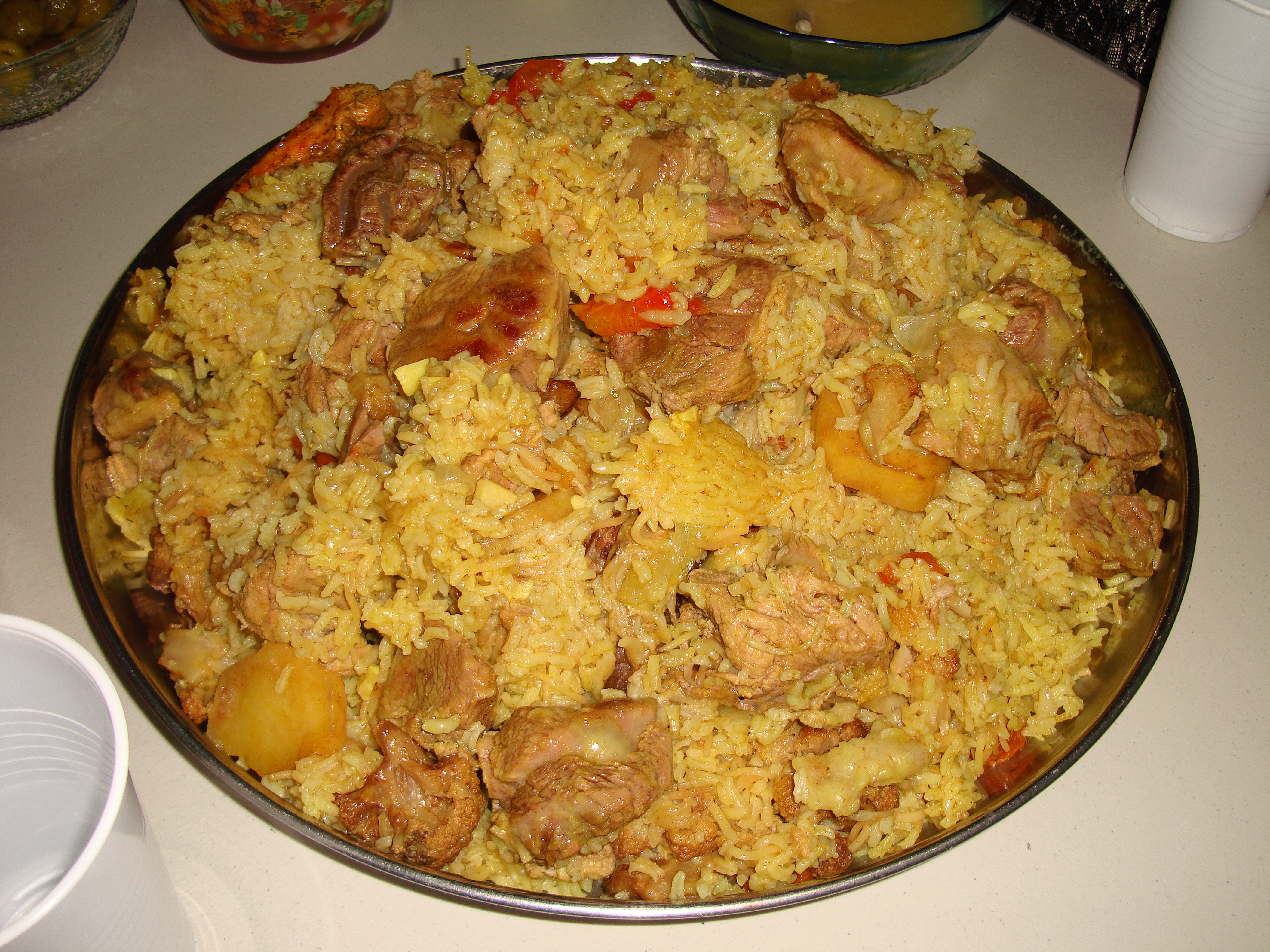
Maqluba (المقلوبة): A casserole made from layers of rice, vegetables, and meat. After cooking, the pot is flipped upside down onto the plate when served, hence the name Maqluba, which literally translates to "upside-down".
-
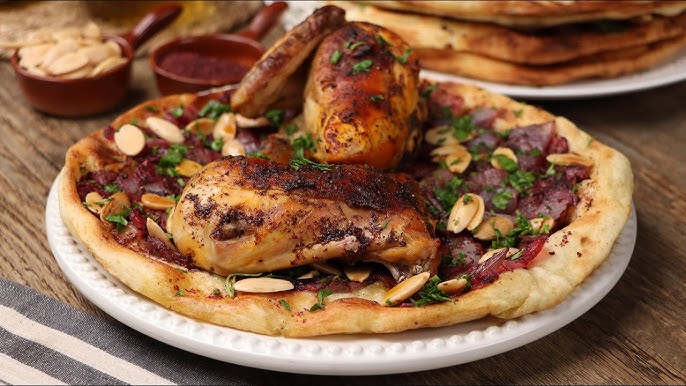
Musakhan (المسخن): A dish consisting of roasted chicken baked with onions, sumac, spices, saffron, and fried pine nuts, served on Taboon bread. Also known as (Al-Muhammar).
Popular Dishes Common in Jordan
-
MakmouraMakmoura
 (المكمورة): is a main heritage dish famous in the villages of northern Jordan (Irbid and Ajloun). It is a thick, massive pie made from layers of rolled-out dough. This pie is stuffed with large amounts of chopped onions, pieces of chicken or meat, and cooked generously with extra virgin olive oil and sumac. Makmoura is baked over low heat for a long time (may take hours), making it a winter feast dish and a symbol of generosity on major occasions.
 -
Shish BarakShish Barak
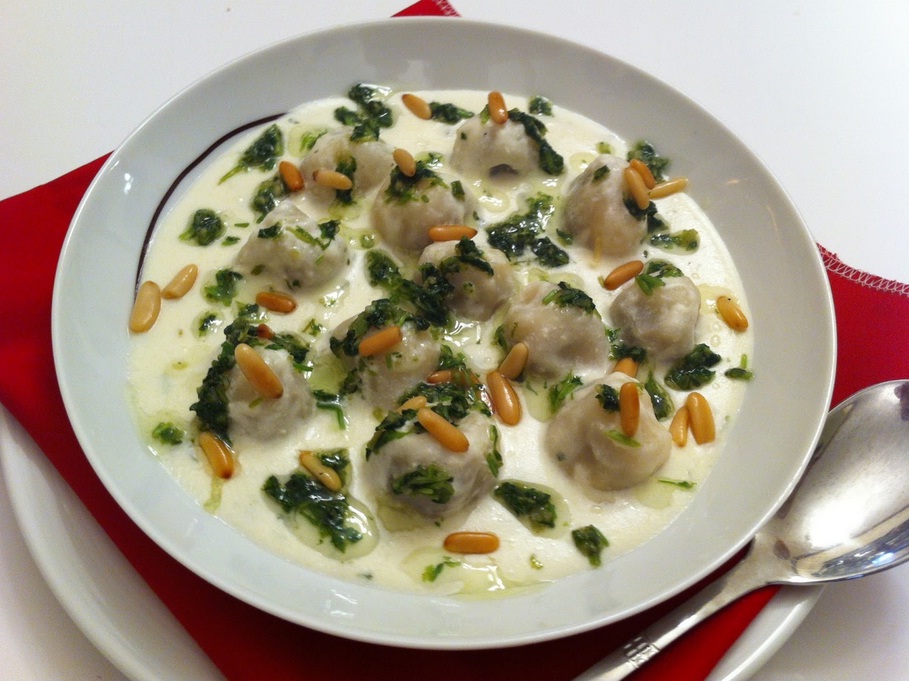 (آذان الشايب): Shish Barak or Shushbarak or sometimes called "Adhan Qtat" in some areas of southern Jordan is a famous dish in the Levant, especially in Jordan (specifically northern Jordan), Syria, northern Saudi Arabia, and Hejaz, as well as in Central Asia, the South Caucasus, and the Middle East. Its origin goes back to Uzbekistan (where it is known as Jushpara). The dish consists of dough filled with minced lamb and shaped like a human ear.
 -
Al-JaajeelAl-Jaajeel
 (Al-Kaakeel or Al-Shaasheel): Popular local dishes specialized in the north based on dough balls or seasonal plant leaves cooked in Jameed or yogurt broth.
 -
Al-MutabbaqAl-Mutabbaq
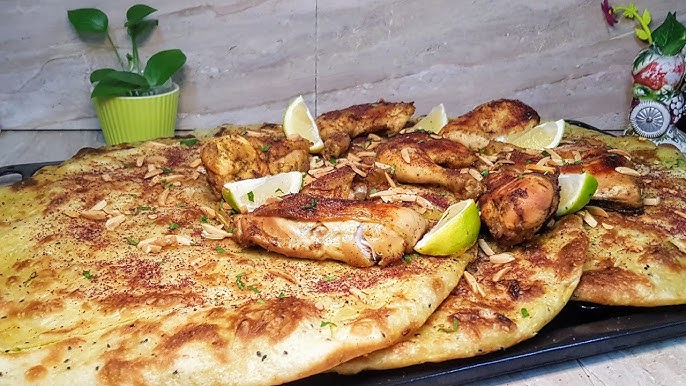 (المطابقة): A delicious dish that is a miniature version of Makmoura, famous in the villages of Al-Taybeh and Al-Wastiyya districts.
Tray Dishes and Quick Preparation:
-
Chicken Tray: A practical and common dish in all governorates, where chicken pieces are seasoned and baked in the oven with vegetables like potatoes and onions until browned, usually served with rice.
-
Meat Tray (Kofta): A dish prepared from seasoned minced meat (Kofta), arranged with slices of vegetables like potatoes and tomatoes, and may be topped with tahini or tomato sauce before baking in the oven.
-
Kibbeh or Kebab (الكبة أو الكباب): Widely popular dishes, prepared in various forms (fried, grilled, cooked) in different regions of Jordan.
Appetizers and Popular Daily Foods in Amman
- Galayet BandoraGalayet Bandora
 (قلاية البندورة): Tomatoes fried and stewed with onions and olive oil, salt, and hot pepper. Can be served with rice but more commonly eaten with bread in Jordan, and is indispensable for all segments of the population in all governorates.
 - FalafelFalafel
 (الفلافل): Balls of chickpea flour fried with Middle Eastern spices. Dipped in every mezze, especially hummus. Jordanian falafel balls tend to come in smaller sizes.
 - Hummus and Ful MedamesHummus and Ful Medames
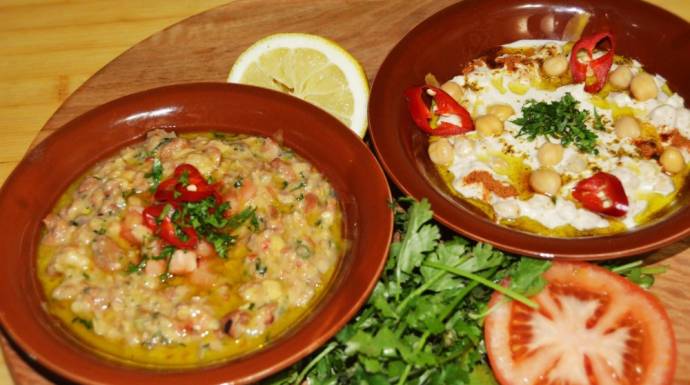 (الحمص والفول): Foods usually served for breakfast, especially on Fridays, and also served as appetizers for lunch and dinner meals.
Desserts
-
BaklavaBaklava
 (بقلاوة): A rich and delicious pastry made from thin, crispy layers of phyllo doughPhyllo Dough
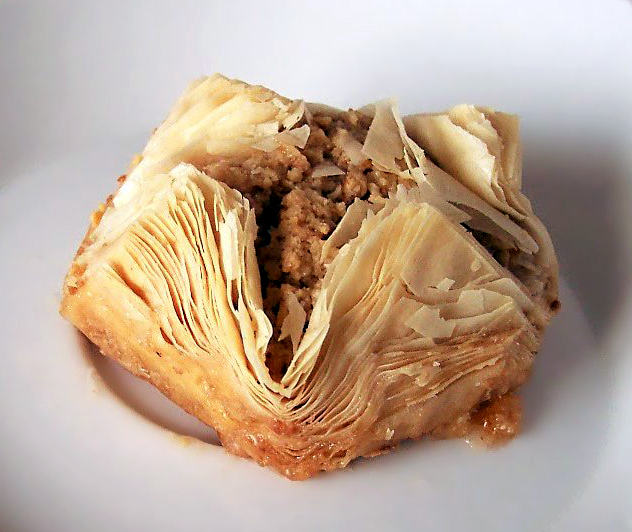 , filled with chopped nuts (often pistachios or walnuts), and generously soaked in honey or syrup (simple sugar syrup).
 -
KnafehKnafeh
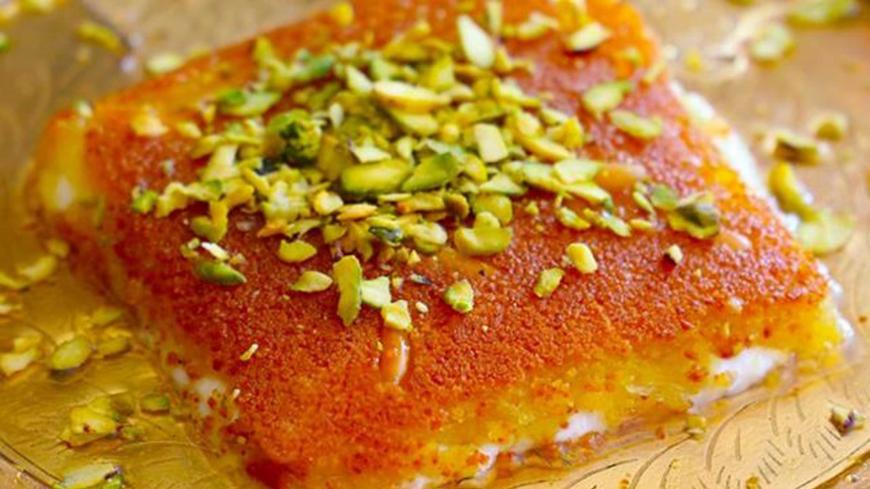 (كنافة): A famous and distinctive Middle Eastern dessert based on cheese. It consists of knafeh dough (coarse or fine semolina threads), layered over a layer of soft cheese, then drenched in sugar syrup often flavored with rose water.
 -
WarbatWarbat
 (وربات): Thin, triangular-shaped pastries, made from layers of thin, crispy phyllo dough, stuffed with soft and sweet cream (or custard). Like Qatayef, Warbat is consumed abundantly during the holy month of Ramadan.
 -
QatayefQatayef
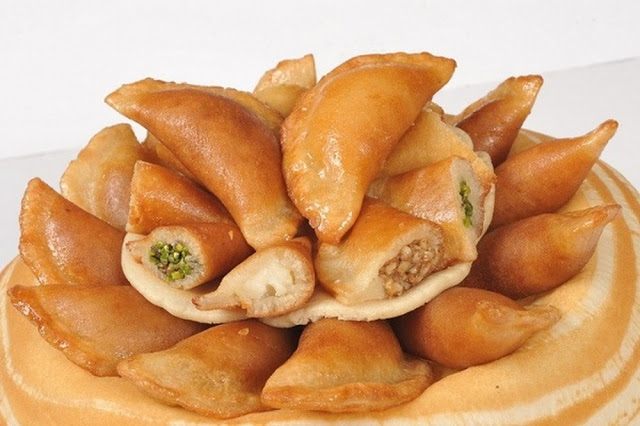 (قطايف): A unique stuffed pancake-shaped dessert in the region. Resembles a folded pancake, traditionally stuffed with fresh cream or ground pistachios, and is a famous dessert consumed primarily during the holy month of Ramadan.
Leave a Comment